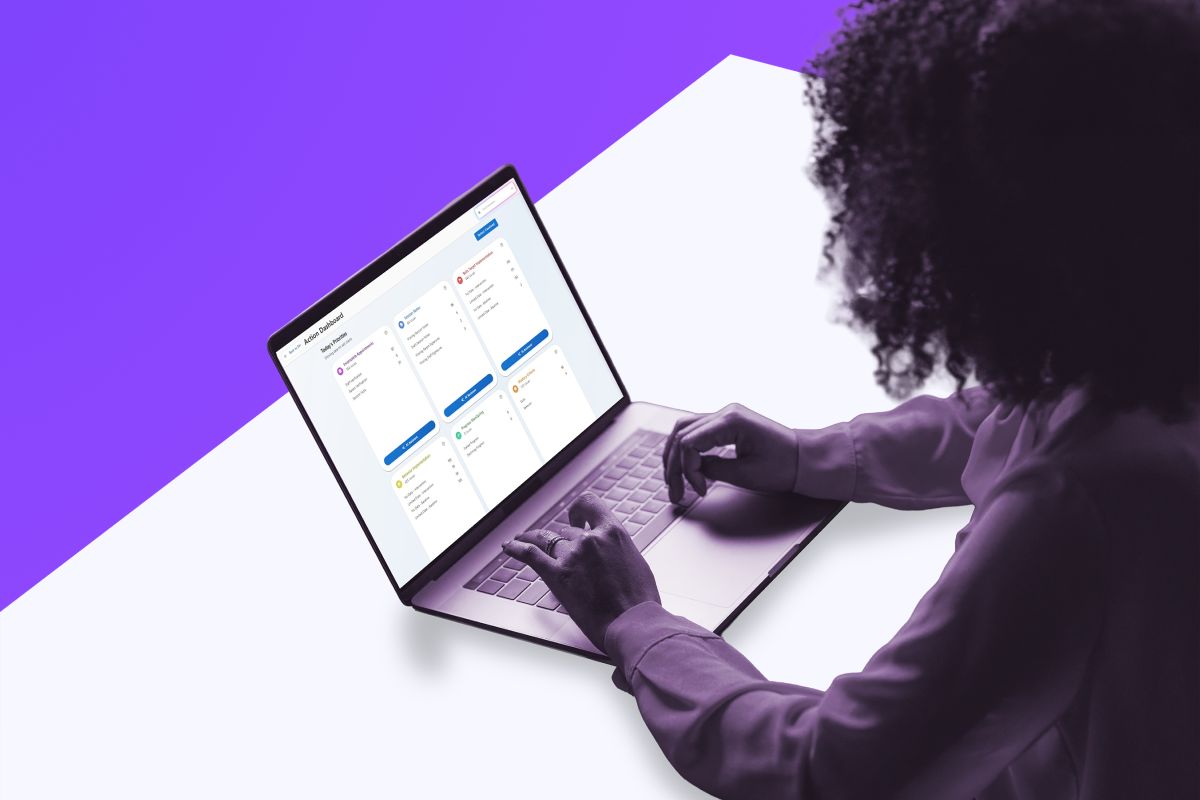
Rethink how you write session notes. Because when templates, AI, and automation tools become part of the process, “pajama time” work is no longer routine.
It’s 10pm on a weeknight. If you’re a BCBA, you’re likely sitting at your kitchen table, in your pajamas, laptop open, typing in your ABA session notes from the workday. Earlier, your spouse had suggested a dinner date, but there was just no time: these notes have to get submitted tonight.
Or it’s 2:30pm on a gorgeous sunny Saturday. You’d love to take your kids to the playground, but you have three more reports to wrap up. (And shhh, they actually were due yesterday.) The swings and slides? They’ll have to wait.
Sound familiar? For many ABA clinicians across the country, admin work has become a major burden, spilling over into off-hours, disrupting work-life balance, and being a big contributor to burnout.
Among the biggest culprits are session notes: the clinical record of what occurred in a session. Session notes cover what happened in a given session with a client, along with goals targeted, interventions used, client response, and next steps. Getting them done on time and to completion matters: They document client progress and outcomes while also supporting clinical continuity, payer requirements, and compliance, which is exactly why they can’t be skipped or rushed.
For ABA clinicians, knowing how to write ABA session notes efficiently is as much about workflow design as it is about writing skill and time management. This article walks through a faster workflow, a customizable template, and where AI and automation fit in, so session notes get handled and you can go on that dinner date or playground outing.
Why ABA session notes take so long
Before fixing any problem, it helps to first name it. For most ABA clinicians, slow documentation is a systems issue, not a matter of workplace performance. For ABA session notes in particular, there are a few common time sinks:
- Trying to reconstruct session details from memory hours later. The longer the gap, the harder it is to recall specifics. This can be especially tough during “pajama time” work, when you’re exhausted and ready to rest.
- Re-entering the same data in multiple places. Session data, notes, billing, and signatures often live in separate software programs. In addition to being time-consuming, repetitive tasks also drain your energy.
- Writing narrative from scratch for every session. A blank page can feel daunting, especially at the end of a long day.
- Rigid systems that don’t match how clinicians actually work. When the tool fights the workflow, the workflow often loses, creating a frustrating work experience.
There’s a clinical integrity issue here, too. When documentation is slow or tools are rigid, that’s when the team develops workarounds: shorthand notes on paper, copy-forward text, notes batched together days later. While often needed in the short term, especially with looming deadlines, workarounds can create big headaches down the line by degrading data quality and putting clinical fidelity and compliance at risk.
How to write ABA session notes faster: A 5-step workflow
Luckily, there’s a better approach: Here’s how to write ABA session notes quickly and efficiently, without sacrificing clinical requirements, so you get time back while staying audit-ready.
Step 1: Capture data in the moment, not after
Collect session data as it happens, so your notes draw from real data rather than recall. The more you document what you actually observed in real time, the less you’ll rely on memory.
Tip: Fewer clicks during a session usually leads to more accurate data. If your data collection process is cumbersome, that’s worth flagging to your clinical director.
Step 2: Start from a structured format
In your ABA session notes, use a consistent structure so you’re never facing a blank page. When every note follows the same fields, you spend less time deciding what to write and more time writing what’s relevant. (Check out the template toward the end of this article as a good starting point.)
Tip: Keep your structure consistent across your team so reviewers know where to find (and how to standardize) key information.
Step 3: Write to the essentials
Focus on what the note needs to demonstrate: goals targeted, interventions used, client response, progress, and plan. Keep it succinct and to the point; a clear, specific note is more useful than a long one.
Tip: Connect each intervention to the goal it supports. That link is what makes an ABA session note clinically meaningful.
Step 4: Document close to the session
Despite hectic workdays, strive to shorten the gap between the end of a session and when you complete the note. Details are fresher, accuracy improves, and your end-of-day backlog shrinks when you can draft a note closer to the session. Even a few minutes between sessions or right after a visit can make a difference.
Tip: If your day allows, block short documentation windows on your calendar rather than leaving everything for 5pm (or later).
Step 5: Streamline review and signatures
To improve efficiency and stave off burnout at one source, build a workflow where review and sign-off happen digitally rather than through printing, scanning, or chasing signatures. Electronic signatures remove a common administrative bottleneck and keep the signed record in the same place as the note itself.
Tip: Check your funder’s requirements for provider and caregiver signatures so your process meets them every time.
These five steps can work with most systems, but when documentation tools are intelligent and integrated, the workflow is easier to sustain. That’s where AI and automation can make a big difference.
Where AI and automation fit in
At ABA organizations, effective AI and automation doesn’t replace clinical judgment, especially with session notes. When used to reduce repetitive work, they enable BCBAs to focus instead on review, refinement, and clinical decisions, as well as prioritizing more time with clients.
Automation can typically help with session note tasks like:
- Pulling session data into a draft note structure
- Pre-populating recurring fields
- Reducing duplicate entry across data collection, notes, and signatures
What clinicians still own is the clinical work: reviewing and submitting every note within an AI-powered platform. Oversight stays with the clinician.
RethinkBH provides clinical data and documentation tools for ABA practices, with session notes and electronic signatures as core parts of the workflow. Session Note AI is RethinkBH’s AI-assisted documentation tool for ABA session note summaries, designed to fit within the clinical workflow rather than add another step. It was developed in collaboration with ABA organizations and is built to be easy to use and adaptable to how you work, so clinicians aren’t pushed toward workarounds that compromise quality.
For clinical directors, this matters most. A tool that clinicians can use comfortably is one they’ll use consistently, and consistent use supports data quality and compliance.
Learn more about Session Note AI and how it supports ABA documentation.
A simple ABA session note template
If you’re wondering how to write ABA session notes with a consistent structure, start with these core fields:
- Session details: Client, date, start/end time, location, staff
- Goals/targets addressed: Programs or skills worked on
- Interventions and procedures used: Prompting, reinforcement, antecedent strategies, etc.
- Client response and data summary: Observed behavior, performance on targets
- Notable events or barriers: Behaviors of concern, environmental factors, caregiver interactions
- Plan/next steps: Adjustments or focus for upcoming sessions
- Signatures: Provider and, where applicable, caregiver (electronic signature)
RethinkBH offers more than 1,500 customizable templates for ABA clinicians to adapt. Learn more
Remember to adjust this structure to your funder and state requirements, and confirm payer-specific documentation rules before standardizing a format across your team.
Common mistakes to avoid when drafting ABA session notes
Even with a solid process, a few habits can undermine the quality of your documentation:
- Copy-pasting prior notes without session-specific details. Each note should reflect what happened in that particular session.
- Using vague language that doesn’t connect interventions to goals. Specificity strengthens the record.
- Batching notes days later. The longer the delay, the greater the risk of inaccuracies.
- Relying on side documents or personal workarounds outside the system. These can fragment your data and create compliance problems down the line.
- Missing or delayed signatures. Build signature collection into your routine, rather than treating it as an afterthought.
Faster ABA session note processes come from combining a consistent structure, in-the-moment data capture, and tools designed around how ABA clinicians actually work. Good documentation supports clinical quality and compliance, and usable tools make that sustainable.
Once your process is up and running, you’ll find that complete, compliant session notes are easier to produce and seamless to turn in. And your date nights, afternoons in the park, and other moments to recharge will no longer take a backseat to paperwork.
If you’re ready to see what a more streamlined approach to session notes could look like for your team, learn more about Session Note AI and request a demo.
Frequently Asked Questions
A session note typically includes session details, goals targeted, interventions used, client response and data summary, notable events or barriers, and next steps. Exact requirements vary by funder and state.
Capture data during the session, start from a consistent template, write to the essentials, and complete notes as close to the session as possible. Digital review and electronic signatures also help remove administrative delays.
AI-assisted tools can help draft notes from session data and reduce repetitive entry, while the clinician reviews and submits the final note. RethinkBH’s Session Note AI is built for this kind of clinician-in-the-loop workflow.
Typically the provider who delivered the session signs the note, and some funders or states also require a caregiver signature. Confirm your payer-specific requirements, and use electronic signatures to keep the process efficient.